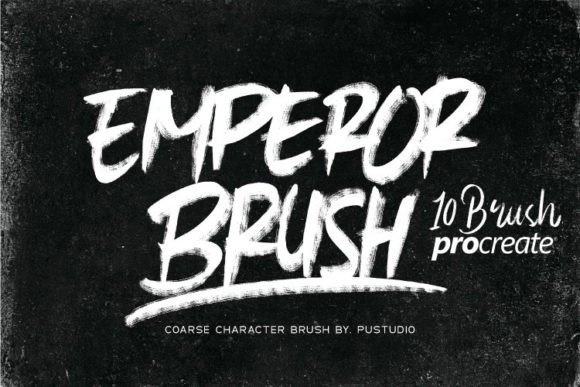
Emperor Brush: Handcrafted Digital Typography
In an era where digital design often leans toward the sterile and the perfectly geometric, there is a growing hunger for imperfection. We crave the tactile evidence of human touch—the slight tremor of a hand, the dry scratch of bristles on paper, and the organic variation that algorithms struggle to replicate. This is precisely where Emperor Brush finds its purpose. It is not merely a tool; it is a bridge between the ancient art of calligraphy and the modern workflow of digital illustration. Designed specifically for creators who value authenticity, this brush set transforms the iPad screen into a textured canvas, allowing for typography that breathes with life and character.
The Anatomy of Authentic Texture
What sets Emperor Brush apart from standard digital assets is its origin story. Many digital brushes are created entirely within software, using mathematical vectors to simulate pressure and opacity. While efficient, these often lack the chaotic beauty of real-world media. The Emperor Brushset, a comprehensive collection of ten distinct ink brushes, takes a different approach. Each brush head was originally crafted by hand, painted with traditional ink, and then meticulously scanned. These high-resolution scans were converted for digital use, preserving the microscopic irregularities of the bristle tips and the subtle grain of the paper beneath.
This process ensures that every stroke you make carries the weight of physical materiality. When you use these brushes in Procreate, you are not just drawing lines; you are deploying captured moments of manual artistry. For handcrafted typography, this distinction is critical. It allows designers to move beyond the uniformity of vector fonts and create lettering that feels grounded, historical, and deeply personal. The texture is not an overlay added in post-production; it is intrinsic to the brush engine itself, reacting dynamically to your speed, angle, and pressure.
Creative Applications for Modern Designers
The versatility of the Emperor Brush extends far beyond simple handwriting. Its robust textural qualities make it an ideal candidate for a wide range of creative projects. Here is how different professionals can integrate this tool into their workflows:
- Brand Identity and Logotyping: For small business owners and entrepreneurs, a logo needs to stand out in a crowded marketplace. Using Emperor Brush to craft custom logotypes adds a layer of artisanal credibility. It suggests craftsmanship and attention to detail, qualities that resonate strongly with consumers looking for authentic, non-corporate experiences.
- Social Media Content Creation: Marketers and bloggers constantly seek ways to stop the scroll. Text overlays created with these brushes offer a stark, beautiful contrast to polished photography. Whether it is a quote for Instagram or a title card for a YouTube thumbnail, the rough edges of the ink capture attention and convey emotion instantly.
- Publishing and Editorial Design: Book cover designers and editorial illustrators can use the set to create chapter headings or pull quotes that complement serif or sans-serif body text. The juxtaposition of clean digital type with rough, hand-painted headers creates a sophisticated visual hierarchy.
- Educational Materials: Educators creating digital worksheets or presentation slides can use these brushes to highlight key concepts. The handwritten aesthetic mimics the feeling of a teacher’s notes on a whiteboard, making content feel more approachable and less intimidating for students.
Mastering the Ten Brushes
The Emperor Brushset includes ten unique variations, each serving a specific function in the typographic toolkit. Understanding when to deploy each brush is key to maintaining consistency in your work. Some brushes in the set are designed for broad, sweeping strokes, ideal for the main stems of large display letters. Others feature finer tips, perfect for serifs, crossbars, and intricate flourishes.
To get the most out of these tools, consider the following practical approaches:
- Layering for Depth: Do not rely on a single pass. Build your letters by layering multiple strokes. Use a broader brush for the base shape and a finer, drier brush to add texture and edge definition. This mimics the way ink pools and dries in traditional calligraphy.
- Embracing Imperfection: Resist the urge to over-clean your vectors. The charm of Emperor Brush lies in its ragged edges. If a stroke looks too perfect, it likely loses its impact. Allow the scanned textures to show through, even if they appear "messy" by traditional digital standards.
- Pressure Sensitivity Calibration: Spend time adjusting the pressure curve in Procreate for each brush. Since these are based on scanned manual brushes, they may respond differently than standard round brushes. A heavier hand might yield a rich, saturated black, while a light touch reveals the paper grain and subtle ink splatters.
Adapting Style for Different Audiences
One of the greatest strengths of this brush set is its adaptability. The same tool can convey rugged masculinity or elegant femininity depending on how it is wielded. For a brewery label or a motorcycle workshop brand, you might use the brushes with heavy pressure, quick movements, and minimal refinement to evoke strength and raw energy. Conversely, for a wedding invitation or a luxury skincare brand, slow, deliberate strokes with lighter pressure can create an air of sophistication and grace.
Freelancers and agency designers should consider the context of the final output. If the design will be viewed primarily on mobile screens, ensure that the finer textures do not get lost. You may need to increase the contrast or simplify the composition. For print applications, such as posters or packaging, the high-resolution nature of the scanned brushes shines, revealing details that add tangible value to the physical product.
Maintaining Consistency and Clarity
While texture is desirable, legibility remains paramount. When working with handcrafted typography, it is easy to let style overshadow substance. To keep your results effective and audience-friendly, adhere to a few core principles. First, establish a consistent weight throughout your piece. If you are using a thick, bold brush for one letter, avoid switching to a wispy, thin brush for the next unless it is a deliberate stylistic choice for emphasis.
Second, manage your negative space. Textured brushes can visually "weigh" more than clean vectors. Give your letters room to breathe. Crowding textured typography can result in a muddy, unreadable mess. Finally, consider pairing Emperor Brush with a clean, simple sans-serif font for secondary information. This contrast helps anchor the expressive hand-lettering and ensures that essential details like dates, prices, or URLs remain easily readable.
In conclusion, Emperor Brush offers more than just a new aesthetic; it offers a new methodology for digital creation. By grounding digital work in the reality of manual processes, it allows creators to infuse their projects with soul and intention. Whether you are a seasoned typographer or a hobbyist exploring lettering for the first time, this set provides the tools necessary to create work that is not only seen but felt. Embrace the texture, trust the hand, and let the imperfections tell your story.